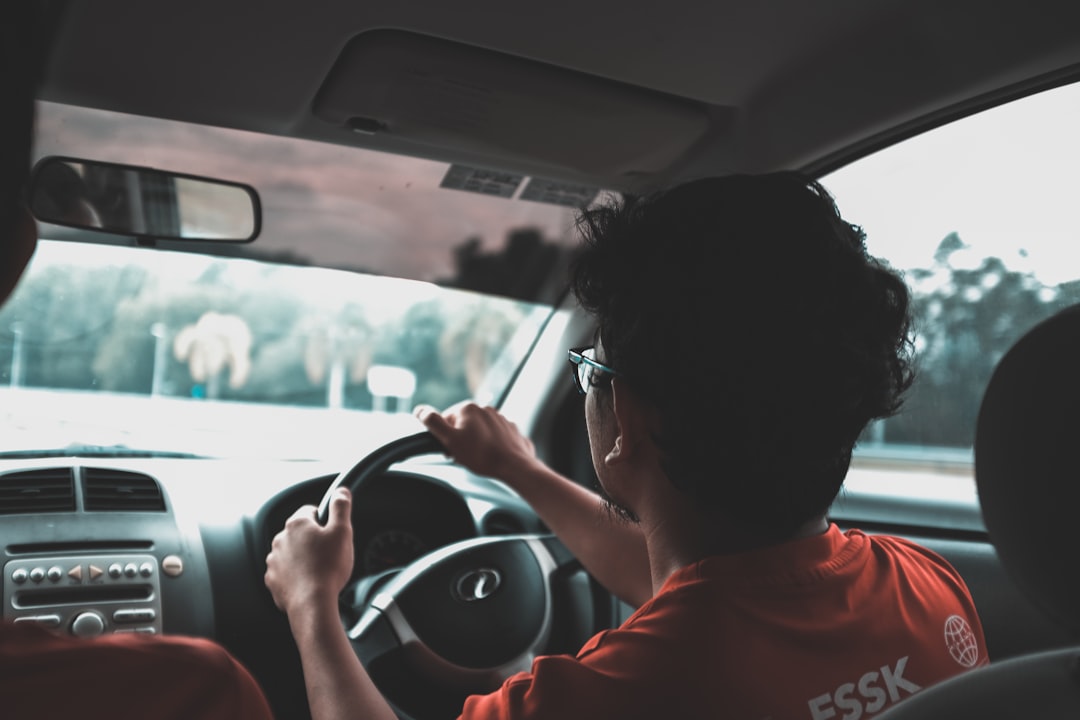
A student who wants to book a driving lesson today often faces this: they call at 2 PM, but no one answers because the secretary is at the counter with a candidate. They call back at 5 PM, but it’s busy. They finally send a text to the instructor, who reads it between slots and forgets to note it down. Three days later, they show up for a lesson that doesn’t exist, or two students arrive for the same car.
I’m not an instructor, and I’ve never issued a driving license. But when I observe a driving school in operation, what stands out to me is the time spent on the phone playing receptionist. Scheduling an appointment, rescheduling it, calling back, shifting it again—these are dozens of small exchanges per week, and each one can get lost in the shuffle.
Booking always goes through you, all the time.
At most of the driving schools I encounter, there’s only one way to book a lesson: going through a human. The student doesn’t see the available slots, so they ask. You check the schedule, respond, and note it down. Multiply that by a hundred students, and you’ve got an enormous workload, all concentrated during opening hours—right when you already have someone in front of you.
The result isn’t just a waste of time. It’s also gaps in the schedule: free slots that no one books because no one sees them. It’s forgetfulness. And frustrated students who find it ‘complicated to book a lesson.’
What does online appointment booking look like?
A reservation tool designed for a driving school is simple for the student: they log in, see the truly available slots (the right instructor, the right car, the right duration), choose, and it’s booked. They receive a confirmation and a reminder the day before, and if they need to cancel, they do so themselves according to the rules you’ve set—for example, no cancellations less than 48 hours in advance.
From your side, you no longer have to manually input anything. The booked slot appears in the schedule and is deducted from the student’s package. You retain control: you open or close time blocks, block an instructor in training, and handle exceptions. But the usual flow—the one that used to consume your days—runs on its own.
A concrete example
Take a driving school with four instructors and 120 active students. Today, the secretary spends much of her morning on the phone scheduling lessons. Each instructor has their own notebook, and on Monday, everything is copied onto the wall schedule.
With online booking, the student opens the app from their phone in the evening, sees that Tuesday at 6 PM is free with their usual instructor, and books it. The secretary doesn’t discover the appointment the next day: she sees it filling up in real time. On Tuesday morning, a student cancels due to illness, the slot reopens automatically, and another waiting student receives a notification and takes it. No one called.
It’s not magic—it’s just the right tool absorbing the movements you used to handle manually.
'My students aren’t all comfortable with an app.'
This is the first objection, and it’s valid. Online booking doesn’t replace the phone—it frees it up. Autonomous students, often the younger ones, manage on their own and no longer call you. Those who prefer calling continue to call, but you can finally answer because the line isn’t clogged by those who could have booked themselves.
Booking, yes—but connected to the rest
Isolated appointment booking isn’t very useful. What matters is that it’s integrated with the rest of your management: the student’s package (a booked hour equals a deducted hour), tracking their progress, payments, and the instructors’ schedule—which I discuss in detail in this article about a driving school’s schedule. That’s where a tool designed for your profession—rather than a generic reservation calendar—makes the difference: it speaks your language (candidates, packages, driving hours, exams) and not that of a hair salon.
That is the principle behind Driving School, a driving school management application I built as an academic project: a central calendar where every slot is tied to a student and an instructor, and where the tool checks the remaining driving hours before accepting the booking.
FAQ
Does it work for a small driving school?
Yes, and the benefits are often greatest there: when one person handles reception, scheduling, and check-ins, offloading reservations really changes the daily routine.
Can students book at any time?
No, you set the rules: open time blocks, minimum notice, number of hours per week, and managed cancellations. The tool enforces your rules—it doesn’t invent them.
Do I have to change everything at once?
No. You can start with online booking alone, let it run for a few weeks, and then connect it to student tracking and payments when you’re ready.
What if an off-the-shelf software already does this?
Then I’ll tell you. If an existing solution meets your needs within a reasonable budget, there’s no need to develop a custom solution. Custom development is justified only when your organization has rules that standard tools can’t handle.
Let’s talk?
If the phone ringing while you have a student at the counter speaks to you, we can explore this together. I’ll start with an audit of your current operations: how lessons are booked, where it gets stuck, and what takes up the most time. I’ll provide a written action plan and an honest cost estimate. And if an existing tool is sufficient, I’ll tell you straight up.