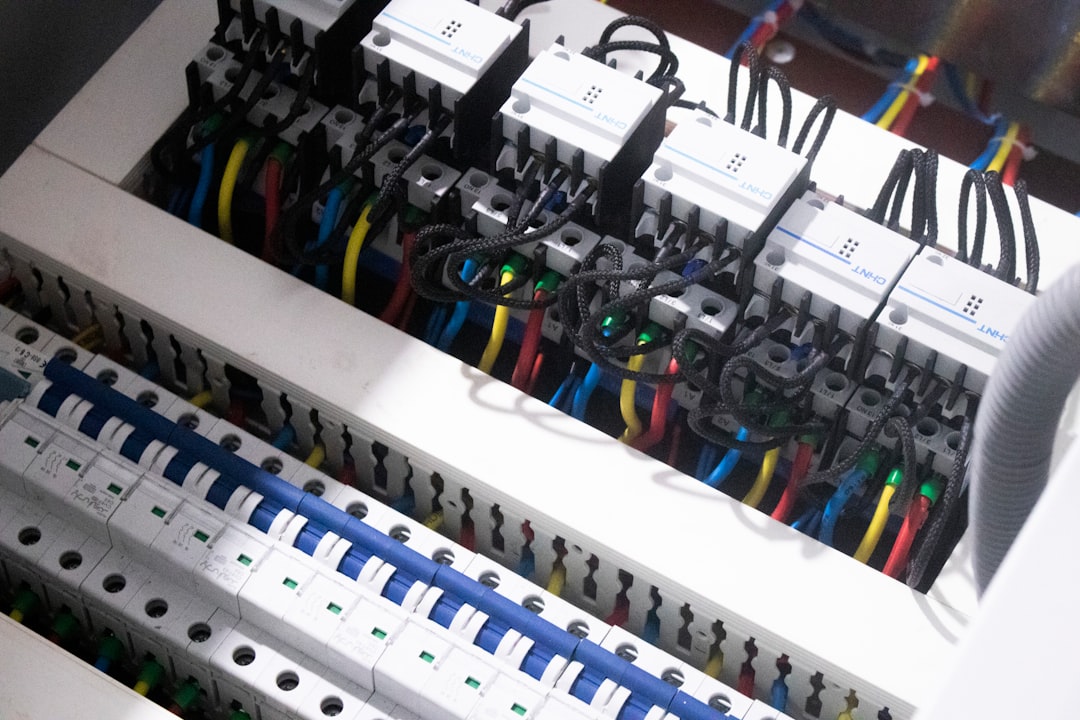
I’ve never pulled a wire or opened an electrical panel in my life. But I’ve spent evenings beside electricians who, once the last job was done, would sit down with a notebook and a phone full of construction photos trying to remember what they’d charged—and especially what they’d forgotten.
If you’re a self-employed electrician, or working with two or three guys, you know exactly what I’m talking about. The day goes like this: a repair in the morning, a renovation in the afternoon, a client calling at 7 PM because ‘it tripped again.’ And then there’s the paperwork, waiting for the evening. Or the weekend. Or never.
An electrician’s estimate is almost always a race against time.
A homeowner calls you to rewire their panel. You go take a look, measure everything in your head, jot down a few notes on a scrap of paper. Then comes the hard part: pricing it out—the materials, the hours, the code updates. But you’re doing it at night, exhausted, between other jobs.
Result? The estimate gets handed over two or three days late. Sometimes even longer. And in the meantime, the client has called two other electricians. The one who responds first, neatly, with a clear estimate? That’s often the one who lands the job—even if they’re not the cheapest.
The issue isn’t that you’re pricing wrong. It’s that pulling together an estimate drains your energy for something that should take ten minutes. You’re redoing your rates, your standard material references, your formatting—all from scratch, every single time.
The missed invoices
That’s where it really hurts. On big, well-organized jobs, everything gets billed—no problem. The blind spots are the small jobs: the one-hour repair, adding an outlet ‘while you’re there,’ a favor for a neighbor of the client.
Those hours? You actually worked them. But between closing the panel and when you should invoice them, a week passes, three more jobs happen, and half of them vanish. No one records them. No one follows up.
Ask yourself the real question: Over the last month, how many hours did you actually work, and how many did you invoice? If you can’t answer in three seconds, it’s probably hundreds of euros slipping through your fingers every month—not because you’re doing a bad job, but because there’s no connection between ‘I did the work’ and ‘I billed for it.’
Why ‘all-in-one’ management software ends up gathering dust
You’ve probably been sold an artisan management software before. Maybe you even bought it. And now it’s sitting somewhere unused, because it takes twenty minutes to log a one-hour repair, asks for fields that don’t apply to your trade, and was never designed for an electrician working out of a van.
A tool that slows you down? You won’t use it. It’s that simple. And a tool you don’t use is worthless—no matter how many boxes it checks on the sales sheet.
That’s the difference between generic software and a custom tool: The first forces you to adapt to its logic; the second adapts to yours. Your types of jobs, your standard materials, how you bill for travel, your regular clients. Nothing more. Nothing less.
A concrete example
Take Julien, an independent electrician with a van and sometimes an apprentice. Before, his records fit in a notebook, a spreadsheet, and his memory.
Now, he opens his phone on-site. He creates the job in three clicks: client, address, what he did, the hours. The panel photo uploads automatically. At night, he doesn’t have to ‘re-enter’ anything—everything from the day is already there, and he just taps to turn each job into an invoice.
His recurring estimates—code updates, panels, lighting—come from a template in two minutes, with up-to-date rates. And once a week, he checks one thing: the jobs done but not yet billed. The list is short, and it no longer includes 300-euro oversights.
Julien didn’t become a manager. He just stopped leaving money lying around.
A tailor-made tool for an electrician—what does that actually mean?
Not a bloated, overcomplicated system. A tool that does just three or four key things—the ones that matter to you:
Record an intervention in thirty seconds, straight from the job site, with photos.
See at a glance what hasn’t been billed yet — the number one money leak.
Generate a clean quote in minutes, based on your usual services and rates.
Retrieve a customer’s history when they call back six months later.
The rest—accounting, inventory, team scheduling—we only add it if you genuinely need it. We start with your daily reality, not a checklist of features.
In short
A fast, clean quote lands more jobs than a cheaper one that arrives late.
Lost hours? They’re the small, unbilled jobs—where the money slips away.
A generic software that slows you down will end up gathering dust; a tool built for your trade, you’ll actually use.
You don’t digitize just to digitize: you first fix the most painful issue.
FAQ
A custom tool for an electrician isn’t just for big companies?
No, it’s actually the opposite. A large company has a team to handle management. The solo or two-person electrician, however, has no one—it’s precisely the person for whom saving two hours a week can change their life.
I already have management software, why switch?
If you actually use it and it suits you, don’t change anything. If you paid for it but it’s gathering dust because it’s too cumbersome, the issue isn’t finding another one like it—it’s getting a tool you’ll actually use.
How much does a custom tool cost?
It depends on what you need, and honestly, sometimes an existing tool is enough—if that’s the case, I’ll let you know. The goal isn’t to sell you software; it’s to save you time and stop forgotten invoices.
How long does it take to set this up?
We always start small: tackle the most painful issue first (often uninvoiced jobs), get it up and running quickly, then add the rest gradually. No six-month overhaul.
Let’s talk?
If you’ve recognized yourself in just one of these situations, we can spend thirty minutes together. I’ll look at how you currently handle quotes, jobs, and invoices, and I’ll give you an audit of your organization with a written action plan —the issue costing you the most money first, and a realistic budget estimate.
And if an existing tool already does the job, I’ll tell you straight up. Let’s discuss your project.