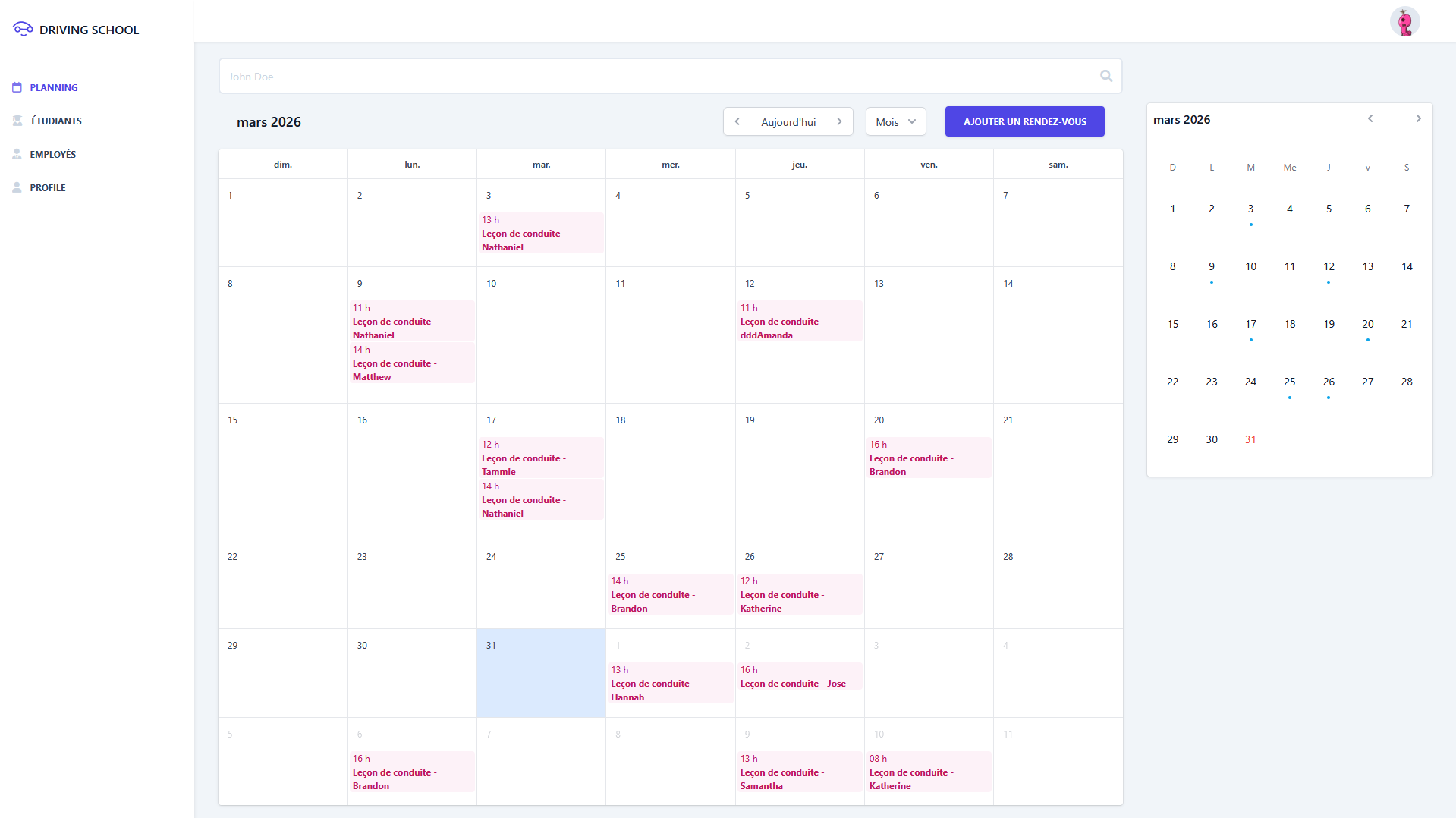
Three weeks ago, I visited the manager of a small maintenance company, about twenty minutes from Rennes. Eight employees, a full order book, and on his desk: two lit screens… and a spiral-bound notebook placed between them. The week’s interventions were written in it, in pen. "The software doesn’t do it the way I want," he shrugged. So he duplicates everything: once in the SaaS they sold him, once in the notebook "just to be sure."
This manager doesn’t have a motivation problem. He has a tool problem. And that’s exactly where a business application developer can change his week—especially when he’s right next door.
A business tool isn’t just another piece of software.
When I talk about custom business applications, people often imagine a big, expensive project reserved for large companies. In reality, it’s the opposite. It’s a tool tailored to a way of working: yours. Not thirty functions you only use three of, but the three that waste you two hours a day—done right.
For this maintenance manager, the real issue wasn’t "I need software." It was: "I want to see, every Monday morning, who’s going where that week, and instantly know what hasn’t been billed." No generic SaaS could handle that without forcing him to twist his workflow to fit the boxes. A custom tool, on the other hand, starts with his notebook—not a template designed for a job that isn’t his.
Why does "near Rennes" matter?
You might think a developer today can be managed remotely from anywhere. It’s true in theory. But a business tool isn’t designed by reading a requirements document: it’s designed by watching someone work.
Being local, around Rennes, means understanding each other quickly. In a video call, screen-sharing, I see the infamous Excel file open in real time, hear the "Oh yeah, but we never do it that way." These details make the difference between a tool you adopt and another tool you abandon after a month.
Concretely, proximity gives you three things:
We actually talk. A real kickoff session over video, screen-sharing, is worth ten email exchanges. You show me, I understand the field, and we don’t waste three weeks on misunderstandings.
Responsiveness. A bug on a Tuesday morning, a "Hey, we should add this": I’m in the same time zone, the same week, reachable—no offshore hotline with ticket number 4712.
No black box. You know who codes your tool, and you can show me the problem during a video call with screen sharing. It might seem minor, but it’s actually what makes a project succeed.
Rennes and its metropolitan area are made up of small businesses and SMEs that have been running on makeshift tools because custom solutions have long seemed out of reach. Hiring a local freelancer is exactly how you get one without the costs and bureaucracy of an agency.
A concrete example: the Monday morning of last week
Let’s take the maintenance company again. Today, its Monday morning looks like this: they open their scheduling software, copy the interventions into a notebook, call two technicians to confirm, and realize on Thursday that three interventions from the previous week were never billed. Multiply that by a year: thousands of euros slip through the cracks—not out of bad faith, just from friction.
Here, a custom tool would fit on three screens: the weekly schedule showing who goes where, an intervention form that a technician fills out from their phone as they leave the job site, and an ‘invoice’ list that auto-fills as soon as an intervention is marked complete. Nothing groundbreaking. Just the end of the notebook, and the end of forgotten interventions.
This isn’t science fiction or a six-month project. It’s the kind of tool you outline in one meeting and deliver in small pieces, starting with what hurts the most.
‘How much does it cost?’ — the real question
Let’s be direct, because it’s the question everyone thinks but doesn’t dare ask: yes, developing a custom tool requires a budget. But the right comparison isn’t ‘custom vs. free.’ It’s ‘the cost of the tool vs. the cost of the current setup’—the hours spent copying data, missed invoices, and errors you have to fix later.
My approach boils down to three points. We start with what hurts the most, not with an over-engineered solution. I give you a realistic budget estimate right from the first conversation—not a vague quote. And if, while listening to you, I realize an existing software would do the job for much less, I tell you — I’d rather have a client who comes back than a forced sale.
To give you a benchmark right now: at a fixed price, most tools for small and mid-sized businesses (scheduling, inventory, quotes, time tracking) cost between €5,000 and €15,000, then €100 to €300 per month for maintenance, depending on the tool. The price mainly depends on the number of screens, users and connections to your software, and it’s set in the quote before we start. Everything is explained on my custom business software in Rennes page.
The prices of each kind of project (website, mobile app, management software, automation) are on my freelance web developer in Rennes page.
FAQ
Do you need to be a big company for a custom tool?
No, quite the opposite. SMEs and small businesses benefit the most from automating the two or three tasks that eat up their days. We tailor the tool to the need, not the other way around.
How long before something usable is ready?
We deliver in stages. A first version that addresses the most painful problem can be up and running in a few weeks, then we enhance it based on real-world feedback.
I’m based in Vitré, Bruz, Cesson… does it work there too?
Yes. I work with companies across the entire Rennes area and Brittany. Proximity is an advantage, not a barrier—we always find the right balance between in-person meetings and remote follow-ups.
What if I already have software I don’t like?
First, we check if we can improve it or connect it to a small complementary tool before rebuilding everything from scratch. Starting over is never my first recommendation.
If you relate to the manager with a spiral notebook, the simplest thing is to talk about it. I always start with an audit of your organization and a written action plan—you leave with something useful, even if we don’t end up working together.