I don’t run a garage, I’ve never drafted a quote for roofing or managed three masonry projects in the same week. But after developing tools for tradespeople and small businesses, I’ve seen the same scene play out over and over. An Excel file opened on Sunday night, named something like `suivi_clients_v4_final_ok.xlsx`, that no one dares to modify for fear of breaking everything. And around it, two or three software programs that do the job ‘more or less,’ but none that truly fit how the business actually operates.
That’s usually when people talk to me about a ‘custom-built business application’—often unsure if that’s really what they need. This guide is here to clarify: what it is, when it’s worth it, what it actually changes, and how much time and money it requires.
What exactly is a custom-built business application?
It’s software built around a specific trade and a specific way of working — yours. Not a spreadsheet repurposed for another use, not a generic software where you’re forced to squeeze in using only one-fifth of the features.
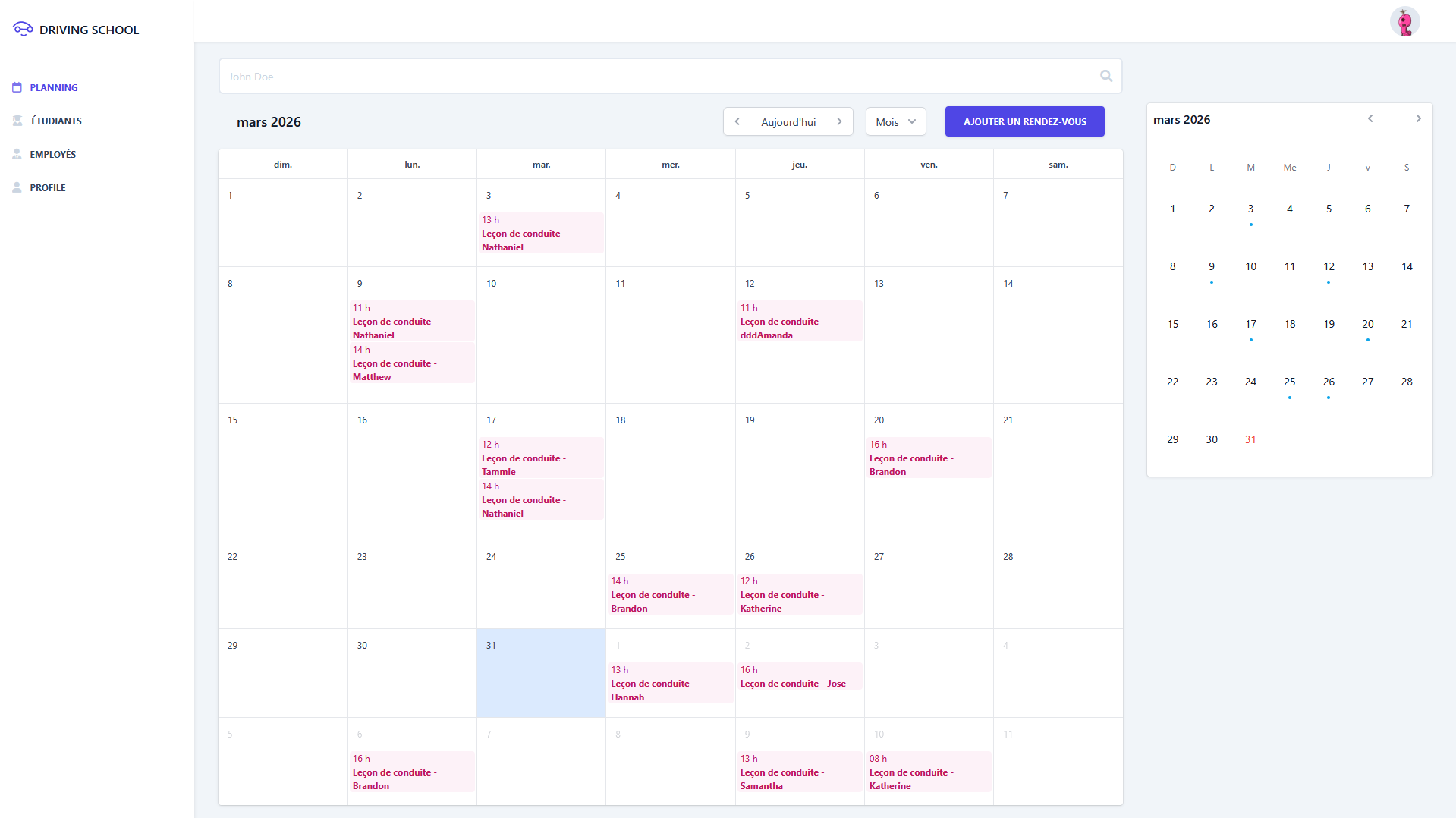
In practice, it takes the form of a tool that tracks quotes, projects, and schedules for a landscaper, one that manages appointments, quotes, and vehicle tracking in a garage, or the module that connects interventions, quotes, and invoices for an electrician. The common thread isn’t the technology—it’s that the tool fits the trade, instead of forcing the trade to adapt to the tool.
Signs your business needs one
You don’t need an audit to spot them—they almost always show up in the same way:
You re-enter the same information multiple times—the client in one place, the quote in another, the invoice in a third.
Your Excel has become a mess that only you know how to navigate, and it crashes as soon as an employee touches a cell.
The information you need in the field stays stuck in the office — the schedule, the latest quote, a client’s history.
You spend your evenings and Sundays on administrative tasks instead of handling them during the day.
The real question is this: over your last busy month, how many hours did you spend copying information from one tool to another, or searching for a document you knew was ‘somewhere’? That’s the time a specialized app saves you.
What a custom-built application truly changes
The first change isn’t flashy—it’s subtle: a single source of truth. One client, one quote, one job exists in one place, up to date, accessible from your phone or your desk. No more three versions of the same file.
Then come the pleasant side effects. Quotes go out the same day because they’re generated in two clicks. Follow-ups aren’t forgotten because the tool reminds you. Copying errors vanish because there’s no copying left. And you present a more polished image to your clients—which, in many trades, matters just as much as the price.
Nothing magical about it: we take your real workflow and remove the friction, one piece at a time.
An example, to make it concrete
Take a plumber-heating technician with two employees. Before, every job relied on a notebook, a text message, and a corner of a spreadsheet: the appointment jotted down hastily, the quote typed up at night, the invoice sometimes forgotten for three weeks. Result: cash sitting idle and follow-ups you’re too embarrassed to make because you’re not sure who owes what.
With a tool built for him, the same day unfolds differently. He creates the job from his phone between projects, the quote turns into an invoice with one click once the work is validated, and his dashboard shows him in black and white which invoices are overdue every Monday morning. He hasn’t changed his trade—he’s just stopped losing it in scattered files.
Off-the-shelf or custom: the right reflex
Let’s be honest: custom solutions aren’t always the right answer. If an existing software already handles 90% of the work without twisting your arm, go for it—it’ll be cheaper and faster. Custom solutions make sense when your way of working precisely is what sets you apart, or when you’re already juggling multiple tools that don’t communicate with each other.
If you’re still torn between a simple brochure website, an off-the-shelf tool, and a dedicated app, I’ve broken down the decision in a separate comparison. The principle remains the same: we choose the lightest option that actually solves the problem.
How much does it cost, how long does it take
That’s the tricky question, so let’s answer it honestly. A first useful tool — not a bloated system, but the core piece that fixes the most painful issue — usually costs between €5,000 and €15,000, as a fixed price, and is delivered in a few weeks, not years.
The reason: we don’t build everything at once. We start with what hurts the most (often quotes or job-site tracking), put it in your hands quickly, and then add the rest later, once the tool is already saving you time. You fund the rest with the time the first version has given you back—not with a blank check upfront.
Once the tool is in place, maintenance costs €100 to €300 per month, depending on the tool. The price depends on the number of screens, users and connections to your software, and it’s set in the quote before we start. The details are on my custom business software in Rennes page.
To compare with the market, the custom software price barometer compiles the prices published by 14 French providers, by project size.
A frequent case in SMEs: a team of technicians on the road. I detailed the choice of field service software (scheduling, slips signed on mobile, 2026 publisher prices) on a dedicated page, with a free six-question test.
How does a project actually unfold?
In practice, it comes down to four steps. We start by looking at your current organization — your files, your tools, your pain points. Then we define the scope of the first version: the bare minimum to make it useful right from day one. I develop, you test in the field quickly, and we adjust based on your real feedback — because a business tool is judged by how it works in practice, not just on a mockup.
I’m a freelance developer in Rennes, working with tradespeople and small businesses across France, and I remain your single point of contact from start to finish: no opaque subcontracting, no customer service on the other side of the world.
To see what these tools look like once in place, two examples still in production in SMEs: Gest-Time for working-time tracking, and StockPME for stock and inventory management.
Frequently Asked Questions
Do I need to digitize everything at once?
No, definitely not. We start with the most painful point, and the rest follows if needed.
Will I be ‘locked in’ with the service provider?
The code and data are yours. The goal isn’t to make you dependent, but to make you self-sufficient.
Does it work on phones, on-site?
Yes. The field is often where the tool is most useful — so it’s designed for mobile from the start.
What if an existing software solution is enough?
I’ll let you know. Making you spend on something you don’t need is the best way to never work together again.
Want to talk about it?
The right first step isn’t a quote—it’s a look at where things stand. I’ll review your workflow, identify the biggest time-waster, and send you a written action plan with a realistic budget estimate — and if an existing tool already works, I’ll tell you straight up. You can check out a preview of my industry-specific apps to get an idea of what they look like.